



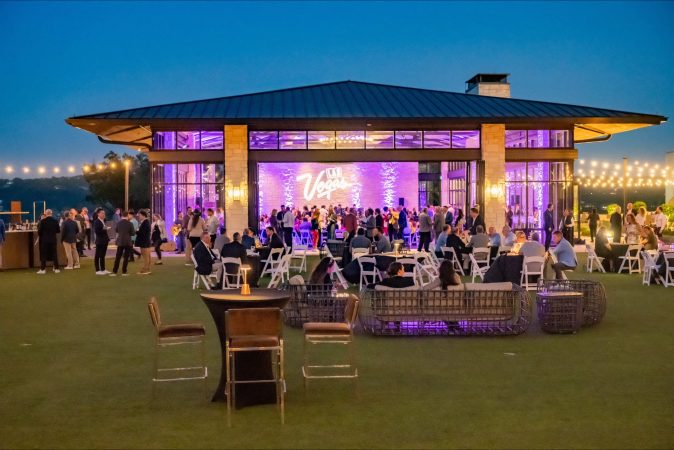
AUSTIN, Texas — The annual SISO CEO Summit, produced by the Society of Independent Show Organizers (SISO), took place at the Omni Barton Creek Resort in Austin, Texas, March 31-April 3.
With the theme of The Innovation Imperative, the event brought together a record number of attendees.
“This was the largest SISO on record, and 22% of the organizers in attendance were first-time attendees,” said SISO CEO Vinnie Polito. “Many of the content areas for which SISO is known were covered, but the content was centered around the Innovation Imperative and delivered several new topics.”
Education Centers on Innovation
“I think of our education as an ‘embrace and extend’ strategy, where we deliver the highest rated content from prior years, and then extend into new and different areas,” Polito said. “For the second year in a row, more than half the speakers were speaking at SISO for the first time.”

Trends and the Economy
The SISO CEO Summit kicked off with Kimberly Hardcastle, President at mdg, a Freeman company, and Ken Holsinger, Senior Vice President of Strategy at Freeman, diving into recent Freeman data to provide an outlook on the evolving events industry landscape. The two presented six key insights for organizers to be on the lookout for and harness into opportunities, and some key points were:
- Twenty-seven percent of attendees said there would be an impact to their participation in events due to uncertainty surrounding tariffs, and that number goes up to 54% for international respondents and 81% for Canadian respondents.
- Organizers will need to focus on strategic market selection, AI-driven personalization and localized content strategies to combat international travel being down.
- To cater to younger professionals coming to events, organizers should prioritize interactive learning formats and immersive and hands-on experiences, and leverage personalization through technology to meet expectations.
- There’s a gap between what users expect and what’s delivered when it comes to event technology.
- Exhibitors need to lean in more on subject matter experts, and organizers need to provide more exhibitor education to help them feel a high ROI.
Anirban Basu, Chairman and CEO of Sage Policy Group, gave an energetic economic outlook to the event attendees, sharing that consumer sentiment is cratering and small businesses are feeling nervous in the current uncertainty of the economy. He also shared that as inflation is appearing to be making a comeback, interest rates will be higher for longer than expected.
Notably, he also shared that when comparing prices from May 2024 to February 2025, transportation services (shipping) is up 52.1%, food costs are up 25.4% and energy is up 57.2%, reflecting the rising prices show organizers are facing while producing events.
In a session focused on the topic of belonging, Naomi Clare Crellin, CEO and Founder of Storycraft Lab, shared the importance of fostering a culture of belonging in the workplace. She shared that companies with high belonging scores reported a 56% increase in job performance and 50% decrease in turnover risk.
Also, according to her presentation, consumers are willing to spend 12-15% more for products from brands that align with their values, and emphasized that in an experience economy, belonging is essential for meaningful innovation.
Innovation in the Events Business
A large focus of the event was innovation in the industry, with sessions focused on how companies are leveraging AI tools, implementing new business models and bringing new approaches to established events. Entrepreneurship in the industry was also a major topic of discussion.
Leveraging AI
Marcus Weldon, who advises Informa on digital technology initiatives, shared how the industry is at a pivotal moment in innovation with AI being so accessible and disruptive. He advised leaders to get ahead of the curve with this technology — or risk falling behind or becoming irrelevant. Weldon said that it’s important to not innovate just to do it, but to focus on innovating to solve real-world challenges.
He then spoke with Paul Miller, CEO of Questex, about the importance of being able to innovate fast, which he believes smaller companies are able to do more efficiently, and that he predicts in 20 years the event experience will be completely optimized from booking travel to matchmaking to personalized itineraries. He also emphasized that innovation usually involves making investments before the money comes to stay at the forefront of the industry.
When it comes to technology, AI can be leveraged to identify the right sponsors and audience for sales teams at show organizers to target. The case study presented by HumanX CEO Stefan Weitz and Vendelux Co-Founder and CEO Alex Reynolds stressed the importance of collecting and analyzing data in the right way to drive the customer experience and their satisfaction. Reynolds shared that by making sure the right people are being connected, and inefficiencies are removed from the experience, show organizers are able to manufacture serendipity for their audiences.

Innovative Event Models and Businesses
Aligned with that advice about investing early from Weldon, Eric Everard, Founder and Chairman of Easyfairs, explained to Paul Miller that for the first couple years, Easyfair shows weren’t making profits, but he and his team believed in the business model and weren’t discouraged. Now the company is one of the top 20 in the global industry.
In a panel moderated by Hervé Sedky, CEO of Emerald, Lisa Hannant, CEO of Clarion Events, and Gabriella Rimmer, Director at Plural Strategy, shared that it’s important to take your time when implementing something new. Hannant shared that businesses need to bring in experienced talent and expertise to successfully execute a new model, and Rimmer emphasized that it’s important to innovate for your specific audience and having an audience-first mindset will guide you on the right path.
In another session all about bringing new aspects to established events, Courtney Muller, President of Manifest and Chief Corporate Development Officer at Connectiv, and Nicole Peck, President of ITC Vegas and Executive Vice President, Digital Innovation Portfolio at Clarion Events North America, shared how they’re elevating their established events.
Peck advised leaders that in order to really innovate within an existing event, it’s important to approach events with an experiential lens. To do this her team introduced a theme to their event, tried out new marketing approaches involving avatars of the show team and introduced new activations that they could monetize in the coming year.
Muller shared that at Manifest the team introduced a new program just for the growing Chief Supply Chain Officer audience and meetups for specific groups, and encouraged app usage among attendees to take advantage of all the possible connections and meetings they could make at the event.
Related. Manifest’s Focus on Education and Networking Pays Off with Growing High-Quality Audience
In a session moderated by Mary Larkin, President of Nineteen Group Americas, Gareth Bowhill, Group CEO at CloserStill Media; Robert Pfeiffer, Chief Corporate Development Officer at Hyve Group and Jonny Baynes, Partner at Plural Strategy, discussed how innovation is possible through M&A, with Baynes sharing that he’s seen a change in the M&A strategy to have a greater sense of openness to different business models in the last five years.
While Bowhill shared he believed organic innovation is easier than acquiring it, Pfeiffer shared that Hyve’s M&A strategy includes acquiring brands that are the epicenter of their industry and building it out throughout the year to collect more data.
Touching on the appeal of the U.S. market amid economic and political uncertainty, Baynes shared that he’s seen no change in strategic interest in the U.S. market, and Pfeiffer said the U.S. market is the place to be. However, Bowhill shared that he has heard that people are considering not participating in U.S.-based events in the short-term.
Entrepreneurship
The event also focused on the state of entrepreneurship in the events industry. In a panel moderated by Doug Emslie, Chairman of Cuil Bay Capital and Raccoon Media Group, and Deputy Chairman of Jacobs Media, three event entrepreneurs shared how they successfully launched their events and how they view launching new ideas in the space. Michelle Metter, Partner at Fast Forward Events, Jonathan Weiner, Fintech and Events Entrepreneur, and Stu Solomon, Co-Founder and CEO of QWC Events, shared how strong networks and knowing when to shift resources to other areas were essential to their events’ success. And while the group did not think it was impossible for entrepreneurship to be fostered within larger organizations with new launches, they did express that it is harder to do.
In another panel focused on entrepreneurship in action, Liz Irving, CEO of Clarion Events North America, spoke with Tom Billington, Founder and CEO of Billington CyberSecurity, Nicole Leinbach Hoffman, Founder of STIMULATE, and Solome Tibebu, Founder and CEO of Behavioral Health Tech. The three founders shared that their event ideas were born from their own passions and observations about gaps in the market that could be filled by an event. They candidly discussed challenges like limited budgets and teams, and how they overcame risks to produce high-level events and conferences.
Hearing from Your Stakeholders: Exhibitors and Attendees Share Their Thoughts

Rhiannon James, Group President, Life Sciences, Healthcare & Technology at Questex, led the panel of exhibitors that shared that some of the top things that help them determine whether to participate in an event and to what extent are the curated content, if the event creates a sense of community, who the audience will be and what their competition is doing, as well as the show floor layout. The group also reinforced the post-pandemic trend of marketing teams being the decision-makers for event participation, rather than sales.
Kathryn Frankson, Global Director of Marketing at Money20/20, then led the panel of attendees who gave insights into what sparks their interest in an event. The group shared that they will look if there are other events held by sponsors and brands that are bolted on to the main event because that increases their ROI on attending. They also said unique locations and changes of venues are attractive, as well as when event brands have a personality that can be marketed.
Industry Forecasts
Greg Hitchen, CEO of Terrapinn, and Hugh Forrest, Co-President and Chief Programming Officer at South by Southwest, discussed the idea of festivalization at events, with Forrest sharing that in designing their flagship event, it’s less about creating an event and more about creating an experience for all participants, while delivering on networking, learning, community and inspiration.
At the end of the program, Steve Corrick, President, US at Collingwood; Louise Obadia, Group Corporate Development Director at Turnmill; Liz Plizga, President at Diversified USA, and Adam Freeburn, Head of M&A at Nineteen Group, discussed the future of events and shared the following key takeaways from the Events Sector Benchmarking Report:
- Two-thirds of event organizers are in marketing services now, generating income from advertising and content marketing.
- Thirty-nine percent of organizers are running hosted-buyer events, with 18% saying they’re planning to run them in the next 12 months.
- One-to-one meetings at trade shows and events are essential.
- Young professionals are challenging show organizers to elevate events as their expectations are higher.
- Events need to have a balance of quality and quantity to ensure participants feel there is high value generated from attending.
Executive Women’s Forum Focuses on Emotional Intelligence
This year’s Executive Women’s Forum focused on emotional intelligence in leadership and kicked off with a keynote from Sylvia Baffour, Executive Coach, Speaker and Author, about strategies to employ to be more emotionally intelligent and communicate effectively.
Heather Farley, CEO of Access Intelligence, Nancy Walsh, President – North America at Informa Markets and Lisa Hannant took to the stage to share their career journeys, how they lead with emotional intelligence and how they aim to empower other up and coming professionals in their networks.
In another session, Yancy Weinrich, President, North America at CloserStill Media, Michelle Metter and Mary Larkin discussed how emotional intelligence is essential to successfully integrate businesses.
On the topic of M&A, Rachel Wimberly, Director of M&A and Business Development at Cuil Bay Capital, talked with Toni Piela, Head of Strategy and M&A at RX US, and Kathleen Thomas, Managing Director at JEGI CLARITY, about the process of guiding business owners through the M&A process. The three emphasized that the process can be emotional for founders and entrepreneurs, and have found that clear communications and expectations help make the deal smooth.

Krakoff Award Winner Announced
At the Annual Business Luncheon and Report to Members, David Audrain was recognized with the 2025 Robert L. Krakoff Industry Award of Excellence. The award, which is the only one given by SISO, recognizes a professional who has made significant contributions to the industry.
Over the course of his career, Audrain, currently CEO of Exposition Development Company, Inc., has worked at the Texas Restaurant Association, Miller Freeman UN, Hanley Wood Expositions, Advanstar, ConvExx, Messe Frankfurt North America and Clarion Events. He also served as CEO of SISO for seven years.
Want more content like this? Subscribe to Trade Show Executive’s weekly newsletter for the hottest news, case studies and thought leadership in the industry.


