CHICAGO — Trade Show Executive (TSE) is continuing to spotlight Black leaders in the events industry for Black History Month 2026, learning about their careers and achievements, and getting their perspectives on how we can drive inclusivity.
Anytra D. Lowe, Executive Vice President of Client Solutions at The Freeman Company
Living in Las Vegas exposed Lowe to the scale and importance of travel, tourism and live events.
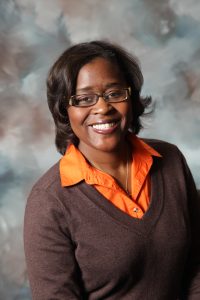
“That perspective led me into the events industry through sales and account management, where I’ve spent nearly 30 years advancing through multiple roles while remaining firmly grounded in those disciplines,” Lowe explained.
For the past 21 years at The Freeman Company, Lowe has focused on disciplined execution, long‑term client partnerships and strong team leadership.
Today, she oversees the organization’s Creative, Customer Experience and Client Solutions teams, with a focus grounded in its internal and external customer journeys.
“I’ve had the privilege of growing alongside an industry that refuses to stay still,” Lowe shared. “We have reimagined how events are designed and delivered, accelerated technology at lightning speed, raised the bar on sustainability and redefined the attendee experience. Expectations are higher, timelines are tighter and adaptability isn’t optional; it’s essential.”
Inclusivity Tip: “Inclusivity isn’t driven by statements; it’s shaped by daily choices. When fairness and accountability shape every decision we make, inclusion becomes more than an initiative; it becomes part of our culture and how we lead every day. When empathy and trust lead the way, everyone belongs and the whole industry gets better because of it.”
Dr. Debonair Oates-Primus, Chief Administrative Officer of Javits Center
Oates-Primus’ father introduced her to the hospitality industry. Growing up, Oates-Primus watched him wait tables and bartend at the Philadelphia Spectrum’s VIP club.
“To go from watching my father serve that room to being trusted to innovate the internal people strategy and culture here at Javits Center is a humbling, invigorating [and] full-circle moment that I don’t take for granted,” Oates-Primus said. “I began my career in higher education, but the transition to the events industry was simple, because it is still all about the people. Both students and event organizers share the same tenacity and fire that drives them to aim for perfection. I’m here to build a culture that supports that hustle mentality that leads to excellence. My motivation is to make sure every single person that works for the events industry feels seen and valued, because people are the heart and soul of the events industry.”
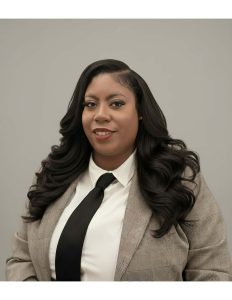
Throughout her career, Oates-Primus has seen the visibility of Black leaders grow.
“Before, they were siloed to fields like human resources or multicultural marketing, but now our influence has shifted to cover the ‘engine room’ behind events, like operations, finance and executive leadership. Black professionals aren’t just attending shows — they are owning and producing them. This diversification of leadership and influence has shifted power dynamics significantly,” Oates-Primus explained.
Inclusivity Tip: “Something event professionals can do to help drive inclusivity in our industry is focus on sponsorship for the next generation of talent. Sponsorship goes beyond traditional mentorship [and means] putting your own reputation on the line to support the growth of others.
“In DEI, it is taught that you need the 3 E’s to successfully weave inclusion into the fabric of the company: executive sponsorship, executive engagement and executive commitment. Part of our role as leaders is supporting the 3 E’s, not just in words, but in action. We have to sponsor people with potential, engage our staff in our culture and commit to being who we say we are as an organization.”
Brandi Sally, Chief of Staff of Javits Center
As an Executive Assistant with no formal event-planning experience, Sally organized a children’s march on the National Mall. This event was so successful that she was promoted to the role of Event Planner, where she managed a range of internal and external programs.
“A pivotal turning point came when I produced the Beat the Odds program and connected with a Convention Services Assistant from the Walter E. Washington Convention Center,” Sally said. “After the event, I took the initiative to stay in touch and spent several months shadowing the convention center’s events team to gain hands-on industry experience. When she was promoted, I applied for and secured her former role, officially transitioning into the convention and hospitality industry.”
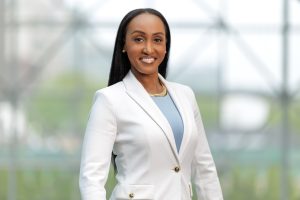
Sally has continued to pursue opportunities that stretch her skills, strengthen her leadership capabilities and allow her to collaborate effectively, and has risen through the ranks to her current position through initiative, relationship-building and consistent performance.
“The shift from largely manual processes to intelligent, automated systems — combined with a strong emphasis on sustainability — has transformed the industry,” Sally said. “Technology, particularly AI, has empowered us to create more efficient, data-driven, innovative and environmentally responsible experiences while elevating the overall impact of hospitality.”
Inclusivity Tip: “Event professionals can help drive inclusivity by being intentional about who we expose to opportunities, mentorship and leadership pathways. It’s important to ensure that individuals who may not look like you or share your background are given the same access, coaching and professional development as their peers so they can truly excel.
“Inclusivity also requires advocacy. If someone isn’t in the room but is qualified, deserving of recognition or ready for advancement, speak up on their behalf. Use your voice and influence to create space for others — loudly and proudly when necessary.
“At its core, building an inclusive industry means fostering environments where everyone feels seen, supported, encouraged and empowered to thrive in their workspace.”
Steven Tiller, Vice President of Labor Relations & Show Operations of Javits Center
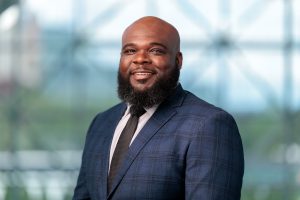
An internship with the Charlotte Checkers gave Tiller his first real exposure to live events.
“After spending time in the hotel industry, I transitioned into the public sector and was introduced to Events DC,” Tiller said. “I joined as an Opening Facilities Manager, working on the construction of the CareFirst Arena, opening day operations and the first concerts. Just six months later, I was promoted to Director of Facilities for the Walter E. Washington Convention Center, which shifted my focus from hotel and arena events into the convention center space.”
Tiller progressed from Director to Senior Director and eventually led sustainability and environmental compliance, helping the building achieve LEED Gold and LEED Platinum certifications in less than one year.
“I also had prior experience hosting major national conventions, which prepared me for larger-scale operations. From DC, I came straight to Javits Center, bringing with me a deep operational and sustainability background,” Tiller explained. “When I first started in the convention center space, the industry was heavily customer-driven — focused primarily on clients coming in and out of the building. Over the past eight to 10 years, I have seen sustainability and community impact move to the forefront. Now, it is not just about serving the client; it is about how we are impacting our local community from both a sustainability and economic standpoint.”
Inclusivity Tip: “We can drive inclusivity by intentionally creating opportunity. It is easy to become focused on making an impact for our own career growth and development, but I try to remind myself that I am not just doing this for Steven — I am doing this to leave behind opportunities for others.
“Inclusivity requires deliberate action. We have to ask ourselves how we are providing space for the next person and how we are ensuring that access does not stop with us. When we create pathways, mentorship and exposure for others, we strengthen not only individuals but the entire industry. That intentionality is what truly moves us forward.”
To read part one of this series, click here. Click here for part two.
To get more events industry news, subscribe to TSE’s free e-newsletter on LinkedIn or through your email.