CHICAGO — Recognizing Black History Month, Trade Show Executive (TSE) is continuing to spotlight Black leaders in the events industry.
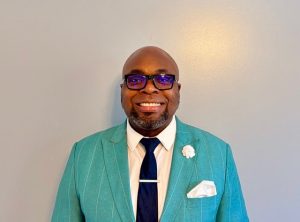
Emile Davis, CEM, Managing Director of Business Development at the American Institute of Architects (AIA)
Davis began his career in the events industry as an intern at the Society for Human Resource Management and eventually transitioned into a full-time role.
Currently, he leads all sales initiatives at AIA and oversees strategic relationship management with exhibitors, sponsors, advertisers and corporate partners. He also works on the International Association of Exhibitions and Events Board of Directors and is a member of its Executive Committee, holding the positions of Secretary and Treasurer.
“Throughout my career, the convention and trade show industry has undergone a fundamental transformation in both mindset and business model,” Davis said. “What was once centered primarily on booth sales and transactional revenue has evolved into a sophisticated, strategy-driven ecosystem focused on measurable outcomes and long-term partnerships.”
Davis explained that revenue generation today is rooted in sales teams serving as trusted advisors, supported by integrated sponsorship programs, audience intelligence and value-based selling strategies rather than relying solely on square footage.
Hailey Hayes, Coffee Fest Event Director at Clarion Events Inc. – North America
Hayes’ events-industry career began with an unexpected connection: She was working in sales when she met Coffee Fest’s former Show Director.
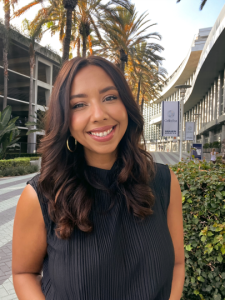
“I didn’t come from a specialty coffee or events background, but I knew sales,” Hayes explained. “I spent years learning the industry on the show floor by listening to exhibitors, understanding their challenges and building genuine, long-term relationships. Over time, that hands-on experience and a consistent focus on putting our customers first, along with strong support from Clarion, allowed me to grow into leadership responsibilities and ultimately my current role as Event Director.”
Through the years, Hayes has observed the trade show space become more data-driven, customer-focused and intentional about experience.
“Exhibitors are more thoughtful about where they invest, and attendees expect clear value, not just presence,” Hayes said. “At the same time, there’s been a greater emphasis on accessibility, community and creating spaces where people feel welcome and supported. The role of an event professional has shifted from simply producing a show to actively curating meaningful connections and outcomes.”
Inclusivity Tip: “Event professionals can drive inclusivity by widening the front door to our industry. Because events are not always a visible career path, we must be intentional about looking beyond traditional networks, hiring for potential and expanding access to opportunity. Inclusivity is about building an industry where people feel they belong and have real pathways to grow, lead and succeed.”
Will Hunter, Vice President of Event Operations at the Las Vegas Convention and Visitors Authority (LVCVA)

Hunter planning a field day at his high school helped inspire a more-than-20-year career delivering world-class events for global brands.
“My entrance into the industry was working on World Bowl XI, NFL Europe’s ‘Super Bowl’ in Glasgow, Scotland,” Hunter explained. “Learning all of the intricacies of event planning, while also dealing with the complexities of being abroad, prepared me for my next role at the NFL League Office, managing aspects of NFL Draft and Super Bowl events. In 2009, Cowboys Stadium (now known as AT&T Stadium) was being built and I was offered an opportunity to be a part of creating operational plans from the ground up as the sole Event Manager for the building.”
During Hunter’s three-year tenure at the stadium, he managed more than 130 events for a combined attendance of more than two million guests.
He currently oversees the LVCVA’s Event Design team, leading the strategy, development and execution of sports and special events.
“I would add that it’s okay to have fun. Take five minutes, go to a place where you can overlook the event and take a mental picture…and then take a selfie,” Hunter said.
Inclusivity Tip: “Listen more than you talk. Go to rooms with different demographics of your own (race, age, abilities, etc.) and listen. Have genuine curiosity about others. Demographic stats are great, but should not take the place of genuine curiosity and interest in others.”
Timothy Gaburungyi, SVP and Chief Information Officer at Javits Center

Gaburungyi entered the events industry from the hotel sector, where he led technology deployments for new builds and major transitions.
He joined Javits Center to modernize its wired and wireless infrastructure, which had not been upgraded since the building opened. Starting essentially from the ground up, Gaburungyi implemented technologies that unlocked new capabilities and significantly enhanced the experience for exhibitors and event producers.
Related. TSE’s Black History Month Leaders Spotlight
“That experience reinforced a core lesson for me: Technology exists to enable the business of events. As customer needs became clearer, our solutions evolved, our team expanded and I ultimately assumed responsibility for all technology operations at Javits,” Gaburungyi explained.
Gaburungyi called the trade show industry “an exceptionally fulfilling career,” because event environments provide the opportunity to work across a broad range of technologies and challenges.
“You experience the direct impact of your work in real time. That combination of variety, immediacy and purpose is rare — and it is what has made this journey both challenging and deeply rewarding for me,” Gaburungyi said.
Inclusivity Tip: “Inclusivity begins with access and opportunity. One meaningful way to advance it is by broadening talent pipelines and being intentional about who is given exposure to real work and meaningful responsibility.
“At Javits, we’ve seen the value of engaging students and early-career technologists — many from New York City programs that provide free or low-cost IT training. By pairing education with hands-on experience and mentorship, we help individuals build sustainable careers while simultaneously strengthening our own operations. When leaders prioritize opportunity over gatekeeping, diversity grows organically and endures.”
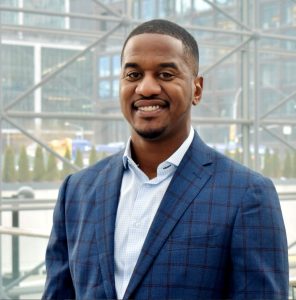
Jabbar Jeffries-El, General Manager of Cultivated
“I started my career as a seasonal employee at the New York Marriott Marquis hotel,” Jeffries-El said. “My first role at the Marriott was working in the Employee Cafeteria as an attendant … I was able to meet all the leadership at Marriott and made a great impression on some of the executives. In one year, I was promoted from the Cafeteria to Room Service Supervisor.”
Four years later, Jeffries-El was Director of Banquets and Catering, overseeing a $60-million operation. Throughout his career, he has held leadership roles at Revel Casino Hotel (now Ocean Casino Resort), and Waldorf Astoria and Intercontinental Hotels in New York City.
“Our industry is always evolving,” Jeffries-El explained. “The F&B industry is like fashion, different styles come and go. The biggest shift recently is the intentional use of AI tools and the implementation of technology, like frictionless payment options, self-checkout kiosks and mobile order-ahead.”
Inclusivity Tip: “Making sure you have multiple voices at the tables. Having people represent every sector of your organization promotes change and different opinions. When people feel like they are part of something, you will receive their best performance. When people are motivated and engaged, it creates an inclusive work environment.”
Joyce Leveston, CMM, CVP, President & CEO of Javits Center
The building and positive impacts of the San Diego Convention Center inspired Leveston to aim for a job in the events industry. Her illustrious career has included time at that same venue, the George R. Brown Convention Center in Houston and numerous other facilities.

“When I think about how I rose through the ranks, I think it was a matter of having the right leadership in a facility with an amazing vision,” Leveston said. “My leadership had a way of making employees feel like they belonged to something bigger than themselves. They empowered you at every level. It was almost unheard of — to be in a space where you could be the doorman, yet still be empowered. You had keys. You could flip the escalators. You had permission to take care of the guests, whatever that looked like.”
The biggest change Leveston has observed in the events industry is the impact of COVID and the exiting of a major generation of baby boomers and the entrance of millennials, which made technology more integral.
“That lack of transition caused a challenge for the industry. It wasn’t that the younger generations weren’t capable — it was that the handoff wasn’t gradual. We went from a generation that never used computers to a generation that only knew computers. That’s a dramatic shift,” Leveston said. “That shift changed everything — from how we communicate to how our websites are built. Technology and generational change didn’t just influence the industry; they reshaped it.”
Inclusivity Tip: “Hire more multiculturally. Make sure women are part of the process and part of leadership. Make sure, generationally, that millennials and Gen Z are part of the conversation.
“They can’t just be on the sidelines — they need to be part of the solution. They need to have a voice in the room.
“If you build teams and a culture with that understanding — if you’re intentional about looking for people who don’t all come from the same traditional backgrounds — you allow for different perspectives in the space. And when you do that, you get a different product and a different outcome. That’s how you become inclusive.
“Build ERGs (employee resource groups) … [and] introduce people-focused initiatives and set a clear direction for your organization … Step back and really look at what your organization looks like. Inclusivity doesn’t just happen — you build it by being intentional and by making space for more voices.”
To get the next article in this series, subscribe to TSE’s free e-newsletter on LinkedIn or through your email.