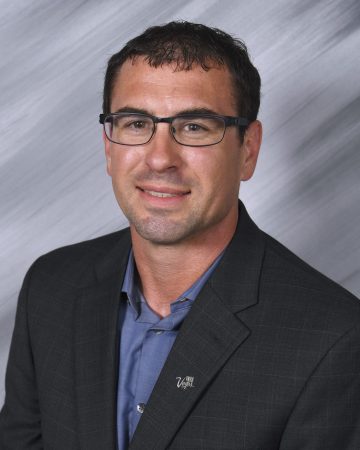
LAS VEGAS — For more than two decades, William Flangas, CMP, CVP, CEM, Director of Convention Services at the Las Vegas Convention and Visitors Authority (LVCVA), has helped make Vegas one of the world’s top trade show destinations.
Flangas has worked with some of the industry’s largest shows, including CES®, CONEXPO-CON/AGG and the National Association of Homebuilders’ (NAHB) International Builders’ Show (IBS).
Trade Show Executive’s Young Professionals Corner sat down with Flangas to learn about his career, work for LVCVA and advice for up-and-comers.
ANDREW: What brought you to the events industry?
WILLIAM: My introduction to the events industry was an entrepreneurial course I took in college. For a group project assignment, we had to create a fictitious company, and while researching, I came across the LVCVA’s annual Visitor Profile Study.
Coming out of college, I was fortunate to get an opportunity to interview for an internship with the LVCVA. I am sure that being able to recall some of the information from that Visitor Profile Study helped me secure the internship.
The internship was with the Human Resources department and led to my first full-time position as an Account Representative. When the economy experienced a downturn in 2008, there was a hiring freeze, which could have been the end of my career in the events industry.
I had been working with the Convention Services department, and unexpectedly, they were able to offer me a position as a Convention Service Manager (CSM).
In a way, my career path was shaped by that one class I took in college. As far as what keeps me here, even after nearly two decades in the industry, no two days are the same; there is always something new to experience and learn.
ANDREW: Could you walk through your role?
WILLIAM: I like to say that the role of the CSM is to be the one-stop shop resource for anything the convention organizers may need leading up to, during and after their event. The CSM serves as the main contact for the trade show and is the go-between with the rest of the convention center team. Our job is not to know everything; in fact, I often tell the clients I might not know the answer, but I know who does.
In 2019, we began an expansion and remodeling project of the Las Vegas Convention Center (LVCC). This led to me working closely with our Senior Director of Capital Projects and our Construction Project Manager to ensure scheduled work does not conflict with building activities.
ANDREW: Could you walk through some key learning experiences from your career?
WILLIAM: For me, a key learning experience has been learning how to best work with your clients to get them what they need for a convention, which sometimes even means telling them no.
It is easy, especially early in your career, to want to say yes to everything a client asks for. As you become more established in your career, you’ll develop a better sense of when to say no.
The key is to do it constructively by offering an alternative solution that still addresses the concern and supports the show’s success.
Related. Trade Show Executive’s Guide to Starting a New Role
ANDREW: What are some of your major milestones?
WILLIAM: The milestone that sticks out to me is the first time being a CSM for a full facility show, which was the NAHB IBS. At the time, the LVCVA also owned and operated Cashman Center, and I was one of the few CSMs assigned there.
It was during this show that I dealt with an exhibitor issue, and I thought I was just doing my job, but my Director saw how I took control of the situation and knew I was ready to take on more.
That leads into my next two milestones, the first time I led CES and the Specialty Equipment Marketing Association (SEMA) Show. It has continued to be such an honor to work with these shows and ensure they receive the high level of customer service that keeps them coming back to Las Vegas.
ANDREW: What advice would you give to young and/or up-and-coming events industry professionals?
WILLIAM: Don’t be afraid to ask questions. It is common early in your career to avoid asking questions because you don’t want to come across as not knowing what you are doing.
It is much better to ask that question than to make a much worse decision on your own. I was lucky to have people I could always ask for guidance, and I work to be that person for my team; they know they can always reach out to me if they need me.
ANDREW: What makes Las Vegas special in the meetings and events space?
WILLIAM: Las Vegas really is unlike any other destination thanks to the amount of meeting and convention space offered within the destination.
Not only do we offer nearly 15 million square feet of meeting and convention space across the city, but we are also home to three of the largest convention centers in the United States, including the LVCC.
The variety of our meeting spaces allows us to easily accommodate shows of all shapes and sizes. Of course, once the meeting is over, attendees can enjoy the world-renowned Vegas experience, which is attractive to show organizers and attendees.
ANDREW: How do you think the events industry has changed during your career?
WILLIAM: The events industry is one that continues to evolve, and I think the biggest change I have seen is the way exhibitors think outside the box to stand out and generate business.
When I started, most exhibitors had their standard 20-foot-by-20-foot booths with some signage and a table, looking to draw attendees in for a conversation.
Over the past few years, we have seen this evolution, with exhibitors becoming much more creative with their spaces, utilizing evolving technology and focusing on making their booth an inviting activation, whether through a game to win a prize or an experience that leaves the attendee with a memorable impression of the exhibitor.
By providing an “experience,” the exhibit has a much better chance of being remembered when it comes time to purchase new equipment or machinery.
ANDREW: Would you have done anything differently?
WILLIAM: I feel very fortunate with how my career path has developed. I feel like I was exactly where I needed to be, and I continue to be, which is the right place at the right time.
ANDREW: What is your prediction for the events industry’s future?
WILLIAM: I think the future of the events industry remains strong. We will continue to see evolution and change, but the core of what these shows represent remains the same.
Trade shows are about people coming together to network, conduct business and shape the future of their respective industries.
Coming out of the pandemic, there was a belief that virtual meetings would be the future, and we saw that just didn’t take. While there is a space for virtual meetings, nothing can replace the value of meeting face-to-face, and the work accomplished when groups meet in person.
To get more articles like this, sign up for TSE’s free Young Professionals Newsletter.