WASHINGTON, D.C. — When Lauren Parr looks at a digital sign inside a convention center, she sees opportunities. It’s not because the screen represents another cost to the event, but because it may point to a different way for venues, organizers, exhibitors and sponsors to share value.
For Parr, Chief Meetings and Exhibits Officer at Optica, the growing investment in digital signage suggests the AV business model may be heading away from revenue built solely on what venues bill events, and toward media inventory that can be sold, sponsored and activated across the venue.
“The advances in digital signage, and more specifically, the investment in this signage by convention centers, has been exciting to see,” Parr said. “It’s now more of an expectation that it’s available to those hosting large events and it’s part of our site selection criteria.”
Follow the Money
The important site selection question this raises is where the venues generate revenue from the events they host.
In a production-based revenue model, a venue may earn a commission based on what groups spend on AV or event production. That arrangement can leave organizers wondering if they are paying for the experience they need or also funding the revenue arrangement behind it.
Emerging digital signage and venue media networks are creating an advertising-based revenue-share model. In this model, venue revenue comes from advertisers, sponsors and exhibitors buying digital inventory across screens in the facility. The venue can create new income from digital displays, while the organizer is not directly funding that revenue through its production budget.
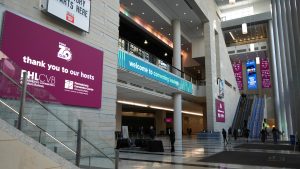
“One of the biggest benefits of incorporating a digital signage and venue media network is the potential for the venue to earn revenue, while also meeting the needs of the customer,” said Tony Hodgins, Regional General Manager with Legends Global which manages the Pennsylvania Convention Center.
The Screens are Ready — The Revenue Model Isn’t
Xpodigital, a pioneer in working with venues on digital signage and event advertising, operates an advertising-based model across more than 300 venues and 10,000 screens.
The company points to Hyatt Regency McCormick Place, which it says saw a 73% lift in brand-related sales revenue under this model. Xpodigital also cites a 2026 Event Advertising Pulse Survey with Hotel Business that found 78% of properties with digital signage have no monetization strategy at all.
That gap may help explain why so many venues default to the revenue models they already know. Digital signage is often installed as infrastructure, not as a strategic media network.
For trade show executives, this creates both an opportunity and a new set of questions.
Who controls the screens? Who sells the inventory? Can exhibitors and sponsors buy into the network? Is the revenue generated from the show organizer’s production budget, or from advertisers and sponsors seeking exposure to the show’s audience?
Those questions are becoming part of site selection.
Digital Signage is Inventory, Not Infrastructure
“The ability to incorporate dynamic images, animations and videos enhances the overall branding of the event,” Parr said. “We’re able to communicate more information in a single space by rotating images.”
In that sense, digital signage points to a different kind of AV economics. Instead of treating screens as another cost buried in the production budget, organizers can use them as revenue-generating media assets that give exhibitors more visibility and give sponsors new ways to reach attendees throughout the venue.
“We’ve been able to provide upgraded opportunities for exhibiting companies, and this has been very well-received,” Parr said.
Xpodigital’s public guidance for venues stresses the importance of asking upfront who is responsible for creating, scheduling and updating content; what support is included; how screens are monitored; what hidden fees may apply; how advertising is sold; and how the system can scale over time.
“The flexibility of a digital platform also allows show organizers to offer broader sponsorship and advertising opportunities to their exhibitors and stakeholders, creating an additional revenue stream that positively impacts their production budget,” said Hodgins.
Featured Image Credit: Xpodigital