



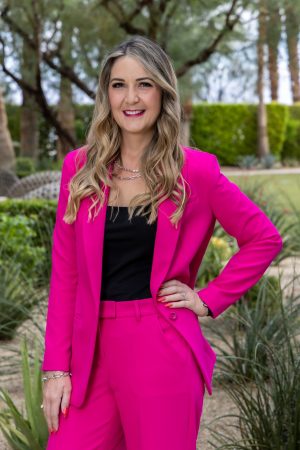
CHICAGO — Our spotlight of the 2025 Trade Show Executive (TSE) Women to Watch continues with Patricia Matthews, Vice President of Event Marketing at CyberRisk Alliance.
Matthews leverages deep segmentation strategies, data-backed persona development and targeted content delivery to supercharge registrations, engagement quality and conversion rates year after year. She pioneered the use of advanced registration curves across her portfolio, providing predictive insights and enabling smarter budgeting and resourcing, and leverages custom-built event analytics dashboards to track true ROI, including influenced pipeline, multi-touch attribution and retention lift.
We spoke with Matthews about her impactful work and got her advice for professionals who want to follow in her footsteps of excellence.
ANDREW: How did you land in the trade show industry?
PATRICIA: I worked my way through college while studying marketing, and I was fortunate to find coordinator roles that offered flexible hours so I could work during the day and attend school at night.
In those roles, I gained early experience producing and marketing lunch-and-learns, customer appreciation events and small trade show booths. I loved that no two days were ever the same, that priorities shifted constantly and that deadlines were firm.
After graduation, I joined a large aerospace company as a Marketing and Event Coordinator. That role allowed me to travel internationally and introduced me to the world of large-scale, custom booth builds.
We even brought airplane mockups indoors. It was exhilarating, and also humbling, because I realized how much I still had to learn.
When I moved to Texas, I joined GES and worked on their exhibit program. Through the International Association of Exhibitions & Events, I met incredible peers who helped me deepen my understanding of the industry and eventually land a role at Informa Markets.
That transition into being an event organizer felt like the perfect blend of everything I had done before: marketing to both attendees and sponsors, while ensuring the events drove business results.
Since then, I have had the privilege of working as an Event Marketer for several organizers, taking all of those experiences and channeling them into better strategies, campaigns and ultimately stronger events.
ANDREW: What skills have helped you move up in your organization, and how do you refine them?
PATRICIA: Three skills stand out for me: curiosity, communication and a love of data.
Curiosity has been essential because our industry is always evolving. New tools, technologies and trends emerge constantly, and being open to them keeps you learning and growing.
Communication has been just as critical. The way you communicate with your team should look very different than how you communicate with your leadership or your board. Being able to adjust your message so it resonates with each audience is a skill I continue to refine.
Finally, data is one of the most powerful tools we have. Data tells the truth and helps guide decisions.
Understanding and applying it well ensures you are not just reacting, but planning ahead with confidence. This skill in particular has been a constant thread throughout my career and one that only grows in importance.
ANDREW: Could you describe how advanced registration curves benefited your portfolio?
PATRICIA: In my current role, I had the opportunity to build the event marketing function and team from the ground up. One of the first things I implemented for our regional events was registration curves.
After collecting six months of data, I created benchmarks by location and overall averages. These became the foundation for setting projections and annual goals.
With these models in place, we can monitor performance week by week and adjust campaigns accordingly. If registrations are trending behind, we may increase ad spend, test new creative or partner with influencers for additional promotion.
If an event is ahead of projections, we can scale back spend or reduce discounts and focus more on attendee revenue and quality.
These insights also allow us to collaborate closely with our sponsorship team. We can now predict on-site attendance within 5% accuracy, which ensures we are selling with confidence and delivering on expectations.
ANDREW: How do you work to grow and retain engaged audiences?
PATRICIA: One of the most effective strategies has been introducing on-site rebooking at our regional events, which has long been a staple at larger trade shows.
This allows us to capture momentum while attendees are energized and ensures we start building the next event early. We’ve even layered in gamification to make it fun and encourage participation.
Audience engagement also comes from listening. Before AI tools, I read every survey response myself to learn why attendees came, what they valued and where they struggled.
Now, AI helps us organize the data more efficiently, but the insights still drive the strategy. If attendees rave about content, we double down on promoting quality sessions. If they complain about navigation, we focus on better signage and wayfinding.
I also believe in walking through the customer journey myself. Registering for the event, using the website and going through the same steps as an attendee often reveals pain points we might overlook.
And when I’m onsite, my best ideas come from sitting down at lunch with attendees and asking about their experience directly. Those conversations are invaluable for identifying what we do well and where we can improve.
ANDREW: What motivates you to continue striving for excellence in your work?
PATRICIA: For me, it’s about purpose. I travel often for my job, and that means time away from my husband and kids.
If I am going to make that trade-off, I want to know my work is meaningful and my best effort is being put forward.
At home, I ask my kids the same question every time they do their homework: “Is this your best work?”
I hold myself to the same standard. If I’m away from my family, I owe it to them and to myself to deliver my best.
ANDREW: What’s the toughest decision you’ve had to make in your role, or a significant challenge you’ve faced as a woman in the industry? How did you overcome it?
PATRICIA: The industry has changed dramatically, but challenges still exist, especially for women. Earlier in my career, I often felt the need to prove my worth twice over.
There were times when my ideas were overlooked until repeated by someone else. Overcoming that meant finding allies, building credibility and leaning on peers who understood the value I brought.
One strategy that has worked well is amplification. When one of my female colleagues shares an idea, I make a point to echo and reinforce it.
They do the same for me. It ensures that voices are heard and ideas gain traction. Over time, these small but intentional actions build a more supportive environment.
Related. Meet the 2025 Women to Watch: Mathilde Le Borgne
ANDREW: How do you maintain a healthy work-life balance and encourage others to do the same?
PATRICIA: Working from home has been a huge help, but it can also blur the line between work and personal life. I’ve developed a few practices that keep me grounded and that I share with my team.
First, I block my calendar for before-work hours, lunch and evenings. I may still work during those times if needed, but having the blocks in place sets boundaries and reminds me to step away.
Second, I set quiet hours on my phone. Everyone who needs me in a true emergency has my cell number, so I don’t need to respond to emails at all hours. It creates space to recharge.
And third, I take care of myself physically while working. A standing desk and walking pad allow me to move throughout the day. Walking a couple of miles during calls not only reduces stress but also keeps me focused and energized.
ANDREW: How can women support each other more in this industry? How is the trade show industry evolving to better support women in leadership roles?
PATRICIA: This industry is still male dominated, but progress is being made. I believe the best way women can support each other is by celebrating one another’s successes.
When one of us shines, we all shine. Supporting each other does not take away opportunities — it opens the door for more seats at the table.
ANDREW: What do you think the next big thing in the events space will be?
PATRICIA: There is a lot of talk about AI, micro-events and personalization, and I believe personalization will be the defining shift.
Attendees want to feel known and valued. With travel and training budgets shrinking, people need confidence that your event is worth their time and investment.
That means showing them that they belong, delivering content tailored to their needs and creating meaningful connections that can’t be found elsewhere.
It’s no longer enough to book a high-profile keynote or celebrity entertainer. Those may be memorable, but they don’t justify the business case for attendance.
What attendees want are solutions to their challenges, valuable relationships and experiences that move them forward.
ANDREW: What advice would you give to up-and-comers in this industry?
PATRICIA: Be flexible, say yes often and seek out opportunities to learn. Events are a team sport, and the more you can collaborate across departments, the better perspective you’ll gain.
Don’t be afraid to use your voice. Come prepared to meetings, ask questions, volunteer for projects and take notes that help you grow. Every experience adds to your toolkit and prepares you for the next stage of your career.
Most importantly, be a great teammate. Success in events is never about one person. It is about collective effort and being someone others trust and want to work with will take you far.
ANDREW: How do you stay updated on industry trends and what resources do you recommend?
PATRICIA: I try to attend as many industry events as possible, whether in person or virtually. Seeing how other organizers structure their programs, market their events or use new technology sparks ideas I can bring back to my own team.
I also subscribe to industry newsletters and follow thought leaders like Julius Solaris, who consistently shares forward-looking insights. Peer conversations are another invaluable resource.
Brainstorming with colleagues about how to adapt creative activations or marketing strategies keeps me inspired and sharp.
This industry has given me opportunities I never imagined when I first started out. I have traveled the world, met amazing people and had nights I will never forget.
It is fast-paced, challenging and deeply rewarding. For anyone considering a career in events, know that your work truly makes a difference; you are creating experiences that connect people, drive industries forward and shape how businesses grow.
To get more Women to Watch Q&As, subscribe to TSE’s free e-newsletter on LinkedIn or through your email.


