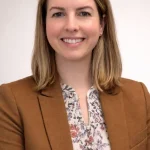
CHICAGO — Trade Show Executive’s spotlight of our 2025 Women to Watch continues with Solana Dove, Sales Operations Director at RX’s ReedPop.
Dove runs a department — which she built from the ground up — that oversees the organization’s product ideation, pricing, fulfillment and customer support, and delivers seamless experiences for its clients and operational efficiency throughout a multi-million-dollar portfolio.
We connected with Dove to learn about her groundbreaking work, mentorship, skill-building and more topics.
ANDREW: Can you tell us how you landed in the trade show industry? Was it a straight path here, or was it unexpected?
SOLANA: Getting into the trade show industry was a happy detour from the path I thought I was on. I studied Food Science at Cornell, but as graduation approached, I found myself increasingly drawn to the world of events. It was a quiet passion I had never fully explored, so I decided to take a leap that felt well outside my comfort zone at the time.
Looking back, it was one of the best decisions I’ve ever made.
I began my career at Octagon, an experiential and sports marketing agency, where I gained hands-on experience working on commercial sponsorships and brand activations tied to major properties like the Olympics and the NBA. It was there that I truly fell in love with the power of live experiences and the impact they can have.
After several years in agency life, I was approached about a role at RX Global on the ReedPop team, focusing on campaign management for sponsorships and brand partnerships.
Looking back, it’s surprising to admit, but at the time I had little awareness of the trade show industry, let alone that B2C conventions were part of it or even connected to established professional organizations. Needless to say, it was an eye-opener.
ReedPop turned out to be the perfect fit and continues to be a place where I can blend my professional experience with my personal passions in a meaningful way.
While a career in trade shows wasn’t something I originally envisioned, I’m incredibly grateful for the unexpected turns that brought me here. It’s been a rewarding journey shaped by curiosity, creativity and saying “yes” to new challenges.
ANDREW: What are some of the skills that have helped you move up in your organization, and how do you refine those skills?
SOLANA: Some of the key skills that come to mind are emotional intelligence, big-picture thinking and adaptability. For me, emotional intelligence really starts with listening.
I try to understand what makes people tick and motivates them before jumping in with my own perspective. A former mentor once shared a quote that’s stuck with me: “Seek first to understand, then to be understood,” from Stephen R. Covey’s “The 7 Habits of Highly Effective People.”
Living by that mantra has helped me build stronger relationships and be more effective in every role I’ve taken on.
Another important skill is the ability to regularly step back and assess the bigger picture. In fast-paced environments, it’s easy to get caught up in day-to-day tasks, but taking time to understand how your work fits within the broader goals of the team and organization is crucial.
This broader perspective allows you to align efforts with strategic priorities, identify potential challenges before they arise and make decisions that support long-term success … ultimately, helping ensure your contributions (and those of your team) not only meet immediate needs but also advance the overall mission.
I find this approach also encourages collaboration across departments, as understanding the interconnectedness of various roles fosters better communication and more cohesive teamwork.
And lastly, I think it’s important to refine your ability to say “why not?” and step into situations that feel unfamiliar or even a little uncomfortable. That’s usually where the best learning happens.
The more you do it, the less intimidating it feels, and over time, you start to realize you’re more capable than you thought. And that’s not to say I don’t also struggle with imposter syndrome at times, but I noticed real progress in my career when I started pushing through those feelings and moving forward despite them.
I can’t say the little voice in your head that says “you can’t do this” ever fully disappears, but you can definitely learn to quiet it.
As a side note, this isn’t a skill necessarily, but I also think it’s really important to seek out mentors from a variety of backgrounds (not just women, and not just people who look or think like you). Some of my most valuable mentors have been men or leaders with very different experiences from mine.
That kind of diversity in perspective has helped me grow both personally and professionally.
ANDREW: Could you describe how you helped build your department?
SOLANA: Initially, I recognized a need within the team for additional structure and support to enhance the efficiency and impact of our sales and sponsorship operations. I sought out the mentorship and sponsorship of several different leaders at ReedPop to help further refine the end vision and path to get there.
We began by focusing on refining client services, an area critical to delivering seamless experiences for both our brand partners and attendees. From there, we expanded to take on oversight of sponsorship product management, seeking to fully understand this essential piece of the puzzle in driving revenue and partnership growth.
The team grew and we deepened our collective expertise, our scope broadened to include sales operations more generally, identifying gaps where the greater sales team and our customers could benefit from enhanced processes and resources.
This included streamlining workflows around exhibitor onboarding, sponsorship fulfillment and cross-functional collaboration between sales, marketing and operations teams. By addressing these areas, our team was able to drive improvements to operational efficiency and deliver a more cohesive experience.
Throughout this journey, our team has stayed committed to bringing real value to our customers and events, celebrating wins along the way while always hunting for the next way to level up.
ANDREW: How do you ensure seamless operations across international boundaries?
SOLANA: We collaborate every day with colleagues and clients scattered across different time zones and locations, which definitely brings its fair share of challenges (like figuring out if it’s breakfast or dinner for everyone else). This “geographical diversity” means we have to be extra intentional and proactive about keeping communication clear and consistent.
To bridge the distance, we lean heavily on our trusty internal communication tools, making sure conversations flow smoothly no matter where or when everyone is working. Regular video calls and check-ins help us stay on the same page, troubleshoot quickly and keep the momentum rolling.
Beyond the work talk, we also prioritize authentic connections beyond the usual project updates and deadlines. Whether it’s casual chats during meetings, celebrating milestones together or sending a cheeky gif or two, we create space to break down barriers, build trust and keep the camaraderie alive, no matter how many miles are between us.
In a global setup like ours, strong communication and real connections are the secret sauce that keeps us tight-knit and crushing our goals.
By mixing clear, consistent communication with a genuine focus on people, we’re striving to foster a team culture where everyone feels supported, valued and ready to bring their A-game every day.
ANDREW: What is your motivation to continue striving for excellence in your work?
SOLANA: I think it’s a mix of my own curiosity and the excellent people around me … First of all, I love tinkering and figuring out how we can make something just a little bit better.
I’m rarely ever 100% satisfied, and I feel like there’s always something to improve, streamline or experiment with. That keeps things exciting for me.
And on top of that I’m lucky to work amongst wonderful people who care deeply about what we do and are constantly pushing the bar. That kind of energy is both inspiring and contagious; it makes me want to bring my best every day.
You can’t help but want to level up when you’re surrounded by that. I also find a lot of motivation in the example set by leadership at ReedPop and RX US.
I’ve got a long list of people I look up to, and watching how they lead and operate makes me want to keep growing and developing into a version of myself that I’d be proud to follow.
ANDREW: Can you share a significant challenge you’ve faced as a woman in this industry?
SOLANA: I think one of the biggest challenges is the lack of representation in senior leadership. Early in my career, I saw so many talented, driven women at the junior and mid-levels, and I naturally assumed that would continue all the way up to the C-suite.
But as I progressed, I started to notice a real drop-off. The higher you go, the fewer women you see and even fewer women of color.
That lack of representation matters. It’s not just about titles or visibility; it impacts how you see your own potential. When you rarely see people who look like you in those top roles, it can be hard to fully imagine yourself there.
It’s easy to start questioning whether you belong or whether you’ll ever be taken seriously at that level. And that only feeds into the imposter syndrome that so many of us already carry with us.
It can be daunting to think about being the only one in the room (or one of just a few), especially in rooms where big decisions are made. That kind of pressure can be isolating, and it often comes with the added emotional labor of feeling like you have to represent an entire group, not just yourself.
But at the same time, I also think this challenge fuels a lot of us to push forward even harder. Personally, it’s made me more aware of the importance of mentorship, sponsorship and making space for others coming up behind me.
It’s also made me more determined to develop into a leader who helps shift those dynamics. I feel certain the next generation won’t have to question whether there’s a place for them at the top.
Related. Meet the 2025 TSE Women to Watch: Casey Clements
ANDREW: How do you maintain a healthy work-life balance to avoid burnout? How do you encourage others to do the same?
SOLANA: I don’t think there’s such a thing as perfect balance and I definitely don’t have it all figured out. Work-life balance has been a real challenge for me over the years.
I often joke that I’m better at teaching it than practicing it. Classic “those who can’t do, teach” energy!
As far as what I’ve found works for me, I schedule “focus blocks” in my calendar each week and keep a hold for “Meeting Free Fridays” on our team calendar to help protect time and headspace for all of us.
It’s all about finding little ways to create breathing room, wherever you can.
I’ve learned I specifically function best with some structure and routine. Whether it’s meal planning for the week, sticking to my nighttime skincare routine or visiting my favorite local pub for weekly trivia nights, little rhythms help me stay grounded.
I also really value personal time and lean into hobbies that help me recharge … reading, podcasts, movies, shows and gaming on my Steam Deck. Making space for those things keeps me feeling like myself outside of work.
One habit that’s been a game changer is following a self-imposed rule to take some chunk of time off every quarter. Even a quick weekend away or a staycation provides something to look forward to!
Oh and every summer, I take two weeks at a little cabin in Maine. It’s my non-negotiable, full reset.
ANDREW: How do you think women can support each other more in this industry?
SOLANA: I think some of the most powerful ways women can support each other in the trade show industry (or any industry really) are through visibility, mentorship and honest conversations. Just seeing women in leadership roles can have a big impact, especially for those earlier in their careers.
It makes it easier to picture yourself in those roles and reminds you that you’re not alone.
Mentorship, in particular, is key. Whether formal or informal, it’s about creating space to share experiences, open doors and offer guidance.
In terms of where the trade show industry is headed, I do think we’re seeing positive change. There’s more recognition that diverse leadership leads to stronger teams and more inclusive events that better mirror our real world.
I’ve seen more women stepping into senior roles, more focus on flexibility and wellbeing, and more companies taking a thoughtful approach to representation, not just at the surface level but in how they build and support their teams.
That said, there’s still work to do especially around intersectionality and making sure women of all backgrounds have a seat at the table. But I’m certainly encouraged by the momentum, and I think we’re moving in the right direction.
ANDREW: What do you think the next big thing in the events space is going to be, whether it be related to technology, work models, experiences, etc.?
SOLANA: I know this is probably a popular answer, but I think the “next big thing” in the events space is personalization. Attendees expect so much more.
Whether it’s through curated content, personalized recommendations, interactive brand activations or even small touchpoints that speak directly to their interests, people want to feel like their experience was designed with them in mind. They want to feel seen, not just marketed to.
And it’s not just about satisfying the attendee; it’s also a huge opportunity for exhibitors and sponsors to create more meaningful engagement. The more personalized the experience, the more memorable and effective it becomes.
Less shiny but just as important, is a deeper focus on measurement. As an industry, we’ve made strides, but there’s still a lot of room to grow when it comes to tracking and translating the performance of less tangible elements like brand impact, attendee sentiment and engagement quality.
Finding better ways to capture and communicate that data is critical. Not just to prove a brand’s ROI, but to continuously improve and innovate on the fan experience.
It’s no longer enough to just say something “felt successful.” The more we can translate those experiences into data, the better we can optimize, prove ROI and tell a compelling story around why it matters.
The trade show industry is evolving quickly, and I believe the more we can focus on meaningful, measurable [and] human-centered experiences, the more successful we’ll all be.
ANDREW: What advice would you give to other up-and-comers in this industry?
SOLANA: My advice is pretty straightforward: Just say “yes”. Or at least, “why not?”
I believe you have to put yourself out there and be willing to take chances.
Opportunities often come from being open to new experiences, even if they push you outside your comfort zone. Whether it’s volunteering for a new project, speaking up with ideas, or expressing interest in a role or responsibility, being proactive and putting yourself out there is key.
That mindset has helped me grow, learn and open doors I might not have otherwise realized were there. It’s about embracing challenges, being curious and trusting that even if something feels risky or unfamiliar, it’s worth exploring.
ANDREW: What strategies have you found most effective for building a strong professional network within the trade show community?
SOLANA: I’ve found it most effective to start by leaning into building a strong professional network based off of pre-existing connections, both with current teammates and mentors. The industry is so much smaller than it seems, and we are all weirdly connected in more ways than we realize.
I’ve also found taking full advantage of the various professional networks your company may already be a member of is a really effective way to develop new connections, while also getting access to new learning opportunities and resources.
In my experience, the trade show community has been very collaborative by nature. Everyone’s willing to share ideas, make connections and help each other out.
It makes building a professional network feel less like “networking” and more like joining a really supportive club.
ANDREW: What role does mentorship play in your career development, and how can other women seek and cultivate these relationships?
SOLANA: I’ve been lucky to have several people in my corner who I consider mentors, and I credit mentorship as a huge part of what’s helped move my career forward. I’m a big believer that you shouldn’t just have one mentor to rule them all. You need a mix of voices and perspectives.
I think it’s especially important for women to seek out mentors of all kinds, including both women and men. Some of my most valuable growth has come from male mentors who’ve challenged me, advocated for me and helped me see things from a different angle.
Having that diversity in mentorship has been a game changer.
Approaching someone as a potential mentor can be a bit intimidating at first, but my advice is to start by looking at your immediate circle of role models at work. Set up quick coffee chats to catch up and pick their brain on different topics.
If you feel like you gel with a particular person and are getting useful guidance from the time you’ve spent with them, ask if they’d be open to striking a more formal relationship with you and scheduling recurring mentorship sessions.
From there, it’s all about the follow-through. Show up to meetings with a plan, actually try their advice and then circle back to share how it went. Keep the conversation going and keep them engaged.
Once you’ve successfully done this, it becomes easier and easier to do again and expand your mentor network.
ANDREW: How do you stay updated on industry trends and changes, and what resources do you recommend to your peers?
SOLANA: In addition to regularly following news from Trade Show Executive Magazine, I also stay current via BizBash and Sports Business Journal.
RX US recently became a member of the Sponsorship Marketing Association, which has been a great resource for me and my team in more of the day-to-day. I really value their articles, case studies and insights on brand partnerships and activations.
And I also try my best to follow industry and pop culture trends through social media and other digital platforms. Staying up on current trends and following brands that our core audience demographics are passionate about helps me feel more connected to what’s new and what’s working in brand activations and live events.
ANDREW: What is your vision for the future of women in the trade show industry, and what steps can be taken to foster greater inclusion and diversity?
SOLANA: I am incredibly grateful to TSE for spotlighting women in our industry and to be counted amongst this amazing group of individuals. But I think we can all agree it would be amazing to reach a point where we don’t even need to have special women’s honors or events because equity is just pre-baked into the culture.
So, my vision for the future of women in the trade show industry is one in which these types of celebrations almost become unnecessary because equality is just how we do business.
Making inclusion and diversity happen starts at the top and must be intentional throughout the entire organizational culture. That means spending time to create actionable plans to drive I&D in talent recruitment AND retention, calling out bias (even the sneaky stuff) and actually listening when people speak up and share feedback.
And, of course, tracking progress and celebrating wins, but always remaining ready to switch it up if things aren’t working.
To learn more about the 2025 TSE Women to Watch, click here.
To get more Women to Watch Q&As, subscribe to TSE’s free e-newsletter on LinkedIn or through your email.