CHICAGO — Super Bowl LX is slated for Feb. 8, 2026, in the San Francisco Bay Area’s Levi’s Stadium in Santa Clara, Calif.
Leading up to the big game, which will feature Bad Bunny as the halftime show headliner and some of the year’s most expensive commercial placements, is a plethora of events, from concert series to the 2026 NFL Honors awards show to the Taste of the NFL to the NFL Pro Bowl Games, just to name a few.
This year, the first-ever BAHC (Bay Area Host Committee) Super Bowl LX Innovation Summit, presented by YouTube, is taking place at the San Francisco Museum of Modern Art (SFMOMA) on Feb. 6. The new event is invitation-only and will bring together 500 leaders from across the sectors of technology, sports, venture capital, private equity and culture.
The evolution of the Super Bowl into a week-long, citywide experience is a reflection of a larger trend in live events around festivalization and leveraging unique venues for offsite programming.
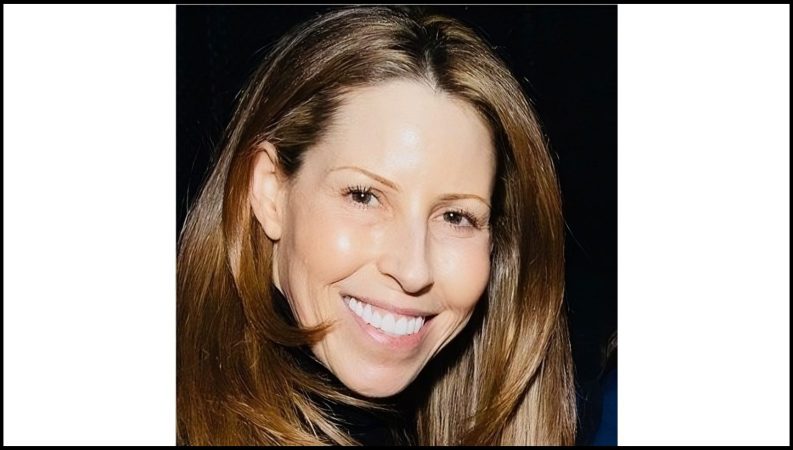
To find out more about major multi-venue experiences like the Super Bowl, Trade Show Executive connected with Jennifer Brisman, Founder and CEO of VOW, an operating system for the live experience economy that unifies data, workflows, stakeholders and guests all into one platform.
Brisman has worked with The Tony Awards, Uber’s Investor Day Summit, The Australian Tennis Open and The PGA among others, and has extensive experience across other major live events.
MADDY: How have you been seeing events, whether they be one day like the Super Bowl or multiple days like a trade show, evolve into experiences that extend outside of the main event?
JENNIFER: Events power a global economy — and the events around the main event prove it. Whether it’s the thousands of experiences orbiting the Super Bowl, CES or SXSW, the host city itself becomes a destination — a living organism fueled by millions of people and trillions of interactions. Every “village” and every “villager” has a role to play, and everything needs to run seamlessly.
Each event within that ecosystem has its own purpose — from celebrity-driven meet-and-greets and broadcast productions to brand activations, product launches and executive summits. The stakes are enormous because these moments can’t be replicated. They’re one-time opportunities to get everything right.
The Super Bowl LX Innovation Summit marks a new era where technology isn’t just powering what happens on the field — it’s orchestrating what happens around it. It’s where sport, technology and culture collide to create something larger than the game itself. The line between an “event” and an “ecosystem” is disappearing. The entire week becomes a living, breathing network of experiences — and the organizations that can connect those dots in real time will define the next decade of live events.
That’s exactly where VOW comes in. Our technology is designed for these complex, multi-venue, multi-stakeholder environments — to unify guest data, workflows and communications so that everything feels cohesive, intentional and extraordinary.
MADDY: In the trade show space, we’ve been talking more and more about attendee journeys, and really focusing on enhancing every touchpoint of that journey. Can you talk about how organizers for events like these, that take place across multiple venues, are approaching mapping attendee journeys for various types of attendees?
JENNIFER: Trade shows and live events are high stakes — they’re cities built for commerce. These environments drive deals, partnerships, launches and learning. They’re the heartbeat of industries. But they’re also so fundamental that we often take them for granted.
We saw this clearly during COVID. Virtual experiences kept us connected, but they rarely closed seven-figure deals. You can’t replicate the power of a handshake, a product demo or a face-to-face exchange of trust. These are massive storefronts that take weeks — sometimes months — to erect and activate, all for a few days of human connection that move entire markets forward.
Yet for all their sophistication, even the biggest events in the world still struggle to deliver a cohesive guest experience. The reality is that attendee journeys remain painfully fragmented. Organizers are often over-reliant on email and SMS because that’s all they can control. They can’t offer 10,000-foot guidance for every guest, nor service them end to end, because the technology simply doesn’t talk to each other.
At VOW, we’re building a secure future where every touchpoint — from historical event data to arrival, access, seating, communications and movement between venues — is connected through a single source of truth. That enables what I call predictive personalization: the ability to anticipate a guest’s needs before they arise and deliver personalized moments at scale. It’s how every guest can feel seen, important and taken care of.
MADDY: What are some of the tools that are needed to manage the staffing, logistics, and guest movement at large-scale events like this?
JENNIFER: Today, these are still largely disconnected systems. Guests interact through ticketing platforms like Ticketmaster or SeatGeek, event apps for basic FAQs and endless emails. Internal teams rely on a mix of messaging apps, spreadsheets and radio comms. It’s a patchwork — functional, but far from intelligent.
At VOW, we centralize those moving parts. Staffing, logistics and guest data all live in one real-time environment. When a change happens in one area — say, a new credential, updated transportation route or seating adjustment — it instantly ripples across every relevant stakeholder. That level of orchestration turns chaos into coordination, and coordination into confidence.
Because ultimately, it comes down to this: Coordination is about getting everyone the same spreadsheet. Orchestration is about ensuring everyone’s actions — staff, sponsors, media and VIPs — are harmonized in real time.
That’s the magic behind the biggest events in the world. When the data, timing and guest experiences are unified — when communications, seating, and scheduling are integrated — a multi-day, multi-venue ecosystem finally feels like one cohesive brand experience.
MADDY: Thinking about all of the programming and events that happen during the week of the Super Bowl, how do the organizers behind it manage to make it feel like a unified experience when there are so many separate parts?
JENNIFER: It comes down to orchestration over coordination. The Super Bowl’s magic isn’t that everything happens at once; it’s that it all feels connected. When the data, timing and guest experiences are unified — when communications, seating and scheduling are integrated — every moving piece works in harmony.
For organizers, the key is designing an experience that looks effortless to the guest, even though it’s complex behind the scenes. When the systems talk to each other and updates ripple instantly across teams, sponsors and attendees, the whole week feels like one continuous brand narrative — not a series of separate events. That’s the holy grail of live experience orchestration, and exactly what VOW was built to achieve.
MADDY: From your perspective, what can B2B event organizers take away from the programming design around events like the Super Bowl?
JENNIFER: That it’s no longer enough to just host an event — you have to architect an experience.
The Super Bowl ecosystem shows how powerful it is to build a week where every activation, conversation and guest journey feels intentional and interconnected. That’s the playbook for the future of B2B events.
Whether it’s a corporate summit, investor forum or internal leadership retreat, the lesson is simple: unify data, anticipate every interaction and treat every guest like VIP. When you do that, your event stops being a moment in time — it becomes a movement people remember.
To get more events industry news, subscribe to TSE’s free e-newsletter on LinkedIn or through your email.