BALTIMORE — On April 23, 2026, events industry thought leaders convened at the Fastest 50 Education Summit for a day of elite knowledge sharing.
With the theme of “Disruption as a Discipline,” the summit was designed to help attendees navigate an increasingly turbulent landscape and thrive in a world of changing attendee expectations, new sponsorship offerings and upgraded venues.
Here are ten takeaways from this impactful learning opportunity.
1. Community is Key
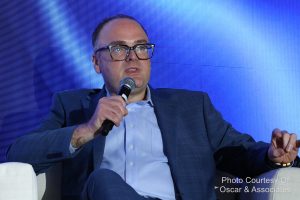
Stuart Ruff-Lyon, CMP Fellow, AAiP, Chief Commercial Officer (Events, Marketing, Sales), Risk and Insurance Management Society, asserted that participants want “one big community under one roof.”
Ruff-Lyon’s team created a more-than-$1-million revenue stream by combining numerous hospitality events at a trade show to create a gigantic community, increasing revenue and headcount.
2. Optimization Doesn’t Happen Overnight
Beth Casson, Senior Vice President at RX, emphasized that a long-term view is truly important for an organizer.
After a year-long research process, RX decided to combine two Vision Expo events into one. The organization was ready to experience short-term loss for long-term gain and has a three-year lens.
“What was nice from a corporate level is that the organization is looking at optimization with a long-term lens,” Casson said. “Anytime you look at something like this, take it with a long-term approach, understand that there might be short-term losses, but the end game is really long-term gains.”
3. Attendee Attention is Changing
Joe Webster, Senior Vice President, Marketing, Emerald, explained that especially with the growth of large language models, shorter attention spans are changing how attendee acquisition and content creation works.
“Algorithms are optimizing for different things,” Webster said. “The fundamental shifts that have been happening on the platforms are making it a challenge to meet the people that you’re trying to meet and bring them in the door in the ways that we have been doing that traditionally for the last decade or so. Platforms have changed, but the underlying fundamentals of why we do what we do haven’t … and the value proposition is less about access to content and more about quality of connections.”
4. Venues Are Leveling Up

Moderator Anna Horn, Vice President, Event Operations, Informa Markets, spoke with David Beck, President and CEO, Kentucky Venues; John Gonzalez, CMP, Senior Vice President and General Manager, Houston First Corporation; and John Schreiber, Vice President of Strategic Account Sales, Las Vegas Convention and Visitors Authority.
From a focus on public space at Houston’s George R. Brown Convention Center to an upgraded power system at the Kentucky International Convention Center to new escalators at the Las Vegas Convention Center’s North Hall, there is much to look forward to.
5. Attendees Are Looking for More Than a Product — They Want an Entire Package
Kirstin Lewis, Vice President, Event Performance, Questex, shared that the organization is responding to this trend by offering packages and implementing a client success team.
Once something is sold, they make sure that everything goes smoothly from start to finish.
Related. Trade Show Executive’s Fastest 50 Awards & Summit Celebrates Growth in Charm City
6. Organize One-to-One Meetings Intentionally
According to Michelle Troop, Chief Revenue Officer, Ai4, and TSE’s May 2026 Power Lunch cover star, simply offering one-to-one meetings isn’t enough.
“If you’re doing one-on-one meetings, put time and energy into doing something,” Troop explained. “Curate your buyers.”
7. Cultivate a Vibe

MAU Vegas is posited as a vibe instead of a trade show. This gives the event a strong, authentic energy that aligns with its target audience of app developers.
“I never want us to be thought of as event management or show organizers,” Angela Harar, Vice President, Strategy & Growth, MAU Vegas, Clarion Events North America , said. “We need to meet them where they’re actually speaking, looking at authenticity and looking at voice.”
8. Be Methodical and Focused, and Avoid Taking on Too Much
When she started working with the event, Harar wanted to change MAU Vegas in many ways.
However, Harar knew that she wanted to get the team along for the ride and prevent overload.
Instead, Harar looked at her timeline and decided that, to get to the finish line, they needed to focus on one or two things at a time.
“We did talk about initiative overload being the shortest path to failure,” Harar said.
9. Attendees Are Craving Action
Dan Cole, Senior Director, Sales, AVIXA, learned that InfoComm attendees were craving “AV in action.”
This inspired AVIXA to build activations on the show floor, such as a workplace of the future, a living, breathing office environment, featuring sponsorable elements.
10. Set Sponsorship Expectations at Point of Sale Very Clearly — and Consider a Thought Leadership Option
Susan Newman, Senior Vice President, Event Strategy, National Retail Federation (NRF), believes that the industry is taking on too much responsibility for sponsors’ ROI.
“We set expectations at the point of sale very, very clearly, so that there are no surprises,” Newman said. “You cannot guarantee anything … We are very good about managing expectations, finding out what their goals are and then aligning the sponsorship with that.”
Newman added that thought leadership is a hot-button topic right now, with options such as roundtables and podcasts being especially popular.
To get more events industry news, subscribe to TSE’s free e-newsletter on LinkedIn or through your email.