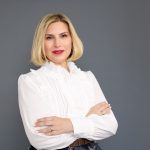
CHICAGO — Kristin Martinez, Vice President of Operations at Fast Forward Events, led a digital reinvention of the organizer’s portfolio, using AI-powered chatbots, a savvy tech stack and automation tools to halve response times, achieve double-digit cost savings and enhance stakeholder satisfaction.
Also, Martinez serves as a leader in the International Association of Exhibitions & Events Southwest Chapter, driving its strategy, educational outreach and community-building initiatives, and was named a Trade Show Executive (TSE) Woman to Watch in 2025.
We connected with her to discuss the AI revolution, her impactful work and her vision for the events industry’s future.
ANDREW: What brought you to the trade show industry?
KRISTIN: Like many in this industry, my path wasn’t linear — but every step prepared me to lead the way I do now.
I started as a licensed cosmetologist, then spent nearly a decade in corporate operations and communications at Jenny Craig’s headquarters.
I got my first taste of live events producing our national sales conference — and it quickly became the part of my job I loved most. When I left that role, I pivoted into medical education events, producing national CME programs through a large San Diego-based healthcare system.
That job was intense — just me and one coordinator managing five programs end-to-end: speaker management, venue contracting, accreditation, marketing, sponsorship and reconciliation. It pushed me to develop strong business acumen and lead cross-functionally long before I had a team.
Then COVID hit — and like many, I was laid off. That’s when Ken Loyst, Founder of Fast Forward, found me on LinkedIn. I was in the car with my three kids in the back seat when he asked if I’d be interested in running the San Diego Food + Wine Festival™ … in just three months.
We went for it. And in November 2021, we pulled off one of the first large-scale consumer events to return to market post-pandemic. I had never run a 10,000-person festival — but I trusted my instincts and built the path in real time.
Since then, I’ve grown alongside the organization — building systems, supporting team growth and navigating real challenges in real time.
From digital infrastructure and automation to team culture and cross-functional collaboration, I’ve leaned into the continuous balancing act of moving fast while building sustainably. The work keeps evolving — and so do I.
ANDREW: What are some of the skills that have helped you move up in your organization, and how do you refine those skills?
KRISTIN: This industry is incredibly complex — success requires both learned skills and instinctive leadership.
On the skills side, I’ve developed a strong ability to align cross-functional goals. I intentionally learn how marketing, sales and operations systems interact so I can design solutions that support the bigger picture — not just one department. I’ve also leaned into process optimization and automation to remove friction and help our teams stay focused on experience over logistics.
As for natural strengths, I have a quick ability to map outcomes and pressure-test decisions before they’re made. I mentally run the scenarios — how something might break, [and] how it impacts attendees or partners — and that helps me lead proactively. I also move fast once I see the path forward. Strategy is important, but momentum is how we build real change.
It’s this blend — system-level thinking and a bias for action — that’s fueled my growth and impact.
ANDREW: Could you describe how you spearheaded a digital reinvention of your company’s event portfolio?
KRISTIN: When I joined Fast Forward in 2021, we had a new CRM but very little automation. I started small — consolidating nine exhibitor forms into one smart form with automated workflows.
It was a win, but the real shift came when I lost most of my ops team to incredible roles elsewhere. Suddenly, it was just me, a mountain of work and a deep need to rethink how we supported our shows.
That’s when I turned to AI. Out of pure necessity (and a little frustration), I built our first internal operations app — powered by Glide and a custom GPT — to replace binders and radios.
I was tired of answering the same questions over and over, [and] of staff trying to find the porter channel just to get booth 310’s trash cleared. I wanted our team to feel empowered, not stuck.
The app worked. And this year, we expanded it into speaker-, sponsor- and exhibitor-facing tools — each tailored to their needs and free from email overload.
Now, AI is part of my daily workflow. It helps me solve problems, pressure-test ideas and build smarter systems.
But at the end of the day, it’s all about freeing up space — for better events, better experiences and better human connection onsite.
ANDREW: Could you walk through the event app that you created and how AI enhanced this tool?
KRISTIN: The first app I built was for our internal staff onsite.
It was bumpy at first — but it changed everything. Instead of flipping through printed ops manuals, staff now had real-time access to schedules, maps, vendor contacts, venue details and the run of show — all in their phones, where they’re used to operating.
It put clarity at their fingertips and cut down dramatically on repeat questions and radio traffic.
From there, we scaled. I developed exhibitor and sponsor apps to replace traditional service kits, with clean tabs for deadlines, forms, FAQs and — in many cases —automated workflows to reduce back-and-forth and improve follow-up. We also rolled out versions for speakers, and even specialty teams, with the same philosophy: give them only what they need, when they need it.
Inside the app is a custom GPT I trained to serve our specific event content. It can answer logistical questions (“How many bottles of wine should I bring?”) and explain the calculation behind the answer.
More critically, it can guide people through emergency protocols with a single prompt —something no paper binder can compete with.
It’s still a work-in-progress, and I’m learning more with every build. But when the team engages with it, adoption follows.
They pass that confidence on to our exhibitors, speakers and partners — and the result is a more empowered, informed and connected event environment.
ANDREW: What is your motivation to continue striving for excellence in your work?
KRISTIN: At the heart of it — it’s my team. I get to work alongside some of the most visionary, creative and committed people I know, and we build these experiences together. When we’re onsite and the community shows up, when people connect and celebrate, and when our team sees the results of their effort — it’s electric.
There’s grace for mistakes and true joy in the wins. I mean, how lucky am I to be featured alongside my VP of Marketing in Women to Watch? That’s the kind of culture I’m proud to help build.
But there’s another side of it too: I have an intrinsic drive to excel. I want everything I touch to be excellent — even if I’m still learning or figuring it out along the way. I’m always thinking, how can we make this better, smoother, smarter next time?
That mix — the people, the pride and the pursuit of better — keeps me coming back. And honestly? I love it. I can’t imagine doing anything else.
ANDREW: What’s the toughest decision you’ve had to make in your role and how did you handle it?
KRISTIN: One of the hardest decisions I’ve had to make was letting go of a team member just weeks before our largest event of the year — while already operating with an extremely lean team.
On paper, she seemed like a great fit. But onsite, the issues escalated quickly: dress code violations, no call/no shows and visible attitude problems during live events. With a 10,000-person, citywide festival on the horizon — and limited oversight across multiple venues — I had to make a call: keep her and risk serious damage to our execution and brand, or let her go and absorb the fallout.
I chose to protect the team, the experience and the reputation we’ve spent 20 years building. Letting her go meant I’d take on work I hadn’t done in years, operate without sleep and stretch a skeleton crew even further.
But I couldn’t let one person undermine what so many were working so hard to deliver.
It was the hardest event stretch of my career — but it revealed the resilience of our team and reaffirmed my role as a protector of both our people and our brand. I’d make the same call again in a heartbeat.
ANDREW: Can you share a significant challenge you faced as a woman in this industry, and how you overcame it?
KRISTIN: For me, the biggest challenge wasn’t just a single moment — it was navigating the reality of pregnancy and maternity leave across multiple chapters of my career.
I’ve had three children, and each time I took six months away from work. That’s a year and a half out of the workforce — and unfortunately, the impact starts long before your out-of-office message goes up. As soon as you announce a pregnancy, the projects stop coming. People begin preparing for your absence months in advance, and after the baby is born, you often come back to a completely different reality — stripped of your prior responsibilities, treated with kid gloves, and in many cases, not taken seriously anymore.
By my second pregnancy, I had figured out how to better navigate the logistics — the paperwork, the state-by-state nuances, the HR maze no one warns you about. What I hadn’t yet figured out was how to self-advocate for my return. Looking back, I wish I had been more vocal about wanting my projects back, about the plan for reentry, and about the fact that parenthood didn’t change my ambition — it just strengthened it. I let too much go unsaid, and it cost me growth.
The way we do things now at Fast Forward is something I’m truly proud of. We don’t treat pregnancy or leave as a career setback. It’s a milestone in someone’s life — and we show up for them. There’s no fear around “will they come back?” There’s gratitude that they do and intention around how we support their return.
If there’s one thing I’ve learned, it’s that returning to work is often harder than leaving. We can — and should — do a lot more to make that easier, especially for women.
Related. Meet the 2025 Women to Watch: Patricia Matthews
ANDREW: How do you maintain a healthy work-life balance to avoid burnout? How do you encourage others to do the same?
KRISTIN: I think the traditional idea of “balance” is unrealistic — especially in the events world. It’s not about achieving perfect equilibrium every day.
It’s about understanding what season you’re in and being clear about what matters most in that moment.
There are times when work demands everything from me, and times when I can be more present at home. The key is identifying your non-negotiables — the pieces of your personal life you protect, no matter what.
For me, one of those is date night with my husband every Tuesday and putting my three kids to bed every night. It’s untouchable, even during show season.
But beyond that, the biggest lesson I’ve learned is this: People can’t support you in ways they don’t know you need. You have to communicate.
I’m clear with my family, friends and team about what’s coming. At the end of August, I jokingly announce, “I’m crawling into my hole now — see you before Thanksgiving.” We laugh, but everyone knows what to expect: that I’m buried in production mode and not ignoring anyone.
The beautiful part is — once people know what you need, they want to step in. They become the heroes. A friend offers to drive my daughter to softball, someone else checks in just to keep my spirits up.
It takes pressure off me and my husband. My friends are amazing, and honestly, my village is crucial to my success. I encourage anyone in this industry to grow their village — it makes the hard seasons possible.
ANDREW: How do you think women can support each other more in this industry? Or, in what ways do you think the trade show industry is evolving to better support women in leadership roles?
KRISTIN: The most powerful thing we can do is speak each other’s names in rooms where we’re not yet invited. Visibility matters.
When one of us gets a seat at the table, we have a responsibility to pull up more chairs.
That support can take many forms — mentorship, hiring women-owned vendors, recommending female speakers and celebrating each other publicly. At our events, we take this seriously.
We review every lineup and roster to ensure our audience sees themselves reflected — [such as] women, people of color, those with disabilities — not just included, but centered.
Being named to Women to Watch is an honor, and I see it as a chance to keep shining a light on others. But I also believe we owe transparency to the next generation.
Especially for young women who want to build careers and families, we need to stop glossing over the hard parts. It was hard. It was messy. It still is sometimes.
But there’s power on the other side — and telling the whole story helps others keep going.
ANDREW: What do you think the next big thing in the events space is going to be, whether it be related to technology, work models, experiences, etc.?
KRISTIN: I feel like we’re living through a new industrial revolution — and AI is at the center of it. My daughter is studying the original Industrial Revolution right now, and the parallels are hard to ignore.
What we’re experiencing isn’t just a shift in tools — it’s a ripple effect touching every aspect of how we work, create, connect and lead.
In events, we’re only beginning to understand what AI can do. Yes, it’s helping us streamline operations, automate tasks and surface information faster and more accurately.
But the real opportunity is in what it frees us up to do: design more intentional experiences, build deeper community and focus our energy where it matters most.
Right now, many teams are only scratching the surface — using AI like a smarter copywriter or content scheduler. But the potential is so much bigger.
This technology isn’t just changing how we plan events — it’s changing who we need on our teams, how we train them and what kind of human touch is needed to balance the digital tools we now rely on.
This is bigger than the events industry. This is a full-blown business revolution.
And with it comes a responsibility — to scale with intention, to care for our people and to understand the ripple effects on the workforce, the environment and the communities we serve.
ANDREW: What advice would you give to other up-and-comers in this industry?
KRISTIN: Chase experience over dollars — especially early on. Don’t rush the beginning.
Those seasons of late nights, tough roles and behind-the-scenes work aren’t just building your skills — they’re building your story, your credibility and your authenticity.
When you earn a seat at the table, people want to know you’ve lived the work you’re now making decisions about. If you skipped the hard parts, how can you truly lead those still in them?
Perspective is earned in the trenches of experience — and that’s what makes your leadership meaningful later.
This is also where you learn how to navigate change, and how to make decisions with impact in mind — not just finances. That kind of integrity is shaped in the early seasons of your career and during the transitions when things feel the most uncertain.
So show up. Ask questions. Seek feedback. Pay attention.
This phase is just as important as the one where you’re making big calls and bigger money.
And one more thing: Learn how to use AI now — not just to write faster, but to think smarter.
AI is transforming this industry, and those who embrace it with curiosity and strategy will have a real edge. Those who ignore it will be left behind.
ANDREW: What strategies have you found most effective for building a strong professional network within the trade show community?
KRISTIN: The biggest strategy? Show up — and show up fully.
Not just to collect business cards, but to actually connect with people. Talk about your work, your challenges, your goals.
Those conversations turn into real relationships that shape your career in ways you can’t always plan for.
Getting involved in industry organizations is a huge part of that — but it comes with responsibility. Most roles are volunteer-based, and while you don’t have to show up at the expense of your day job, you do have to communicate clearly about what you can and can’t take on.
People in this industry understand bandwidth — but disappearing without notice earns a different kind of reputation.
I also think showing up generously — sharing ideas, offering help and being real — is underrated. And mentorship is another powerful strategy.
When you invest in younger professionals or students, your network grows in all directions. They become advocates for you in rooms you’re not in yet, and it’s incredibly rewarding to watch their success unfold.
Networking isn’t about who you meet — it’s about how you show up and who remembers you when it matters.
ANDREW: What role does mentorship play in your career development, and how can other women seek and cultivate these relationships?
KRISTIN: Mentorship has been one of the most defining pieces of my career. I’ve had a few women in my life who saw potential in me long before I saw it in myself — and their encouragement helped shape what I believed was possible.
One of those mentors is Michelle Metter, Co-Founder of Fast Forward. She’s one of the greatest connectors I’ve ever met. When she brings me into a room, she introduces me with intention — framing the connection in a way that immediately builds credibility. That kind of advocacy is powerful. But once the door opens, it’s on me to step in, show up and contribute.
At this stage in my career, mentorship looks a little different. I’m stepping deeper into the entrepreneurial side of the business — and learning how to run and scale a company. That kind of “in the trenches” guidance is just as valuable as the early career coaching I received.
For women looking to find mentorship, my advice is this: Don’t wait for someone to officially raise their hand. Look for people whose work you respect, show up in the spaces they’re in and find ways to build real connection.
And when someone gives you their time, show them it mattered.
ANDREW: How do you stay updated on industry trends and changes, and what resources do you recommend to your peers?
KRISTIN: Like many of us, I read the usual industry publications — TSE, BizBash and the major trade show newsletters — but I also subscribe to exhibitor and customer community updates. Seeing what’s shifting in their worlds helps me stay ahead of market changes that may not hit our radar otherwise.
That said, my best insights come from being in the field — attending events that aren’t mine and staying in conversation with other producers. Any time I’m at an industry event, I ask: What did you change this year? Did it land? What would you do differently next time? These kinds of honest, peer-to-peer conversations tell you more than any trend report ever could.
I also listen to AI Explored, which offers some of the most actionable insights I’ve found on applying AI beyond the basics.
And of course, I stay in the trenches at my own shows — because when something isn’t working, you feel it immediately.
ANDREW: What is your vision for the future of women in the trade show industry, and what steps can be taken to foster greater inclusion and diversity?
KRISTIN: My vision goes beyond trade shows — it’s about women in the workforce overall.
We need to reframe the conversation from “working moms” to working families. Has anyone ever said “working dad”? Of course not — it sounds ridiculous. And no one asks fathers how they’ll handle child care when they travel. But women hear it all the time.
These expectations aren’t just unfair — they’re structural. Until we stop placing the full burden of balance on women alone, equity at the top will stay out of reach.
In this industry, there are a lot of women, but far fewer in senior leadership. When we do rise, we have to stop competing and start widening the circle — mentoring, sponsoring and intentionally making space for others. That includes celebrating women without kids, too. Career paths are personal, and support should be unconditional.
One thing I’ve learned is how important it is for kids to see their mom’s work — to attend events, see the community we serve and understand the impact. That visibility plants seeds for the next generation.
Whether you’re raising a family or building a legacy on your own terms, we need to hold the door open for each other at every stage.
It’s all about abundance over scarcity. There’s room for more women, more lived experience and more shared power. And when we build that together, everyone wins.
ANDREW: Is there anything else that you would like to add?
KRISTIN: My hope is that the next woman to watch sees herself reflected in this story. That she knows it’s okay if the path isn’t linear, if she’s figuring it out as she goes, or if she’s in a hard season.
That’s not failure — that’s the foundation. I’ve been the only woman in the room, the mom running into Zooms after daycare drop-off [and] the person reinventing everything on the fly.
You belong. Keep going. This industry needs you.
To get more Women to Watch Q&As, subscribe to TSE’s free e-newsletter on LinkedIn or through your email.