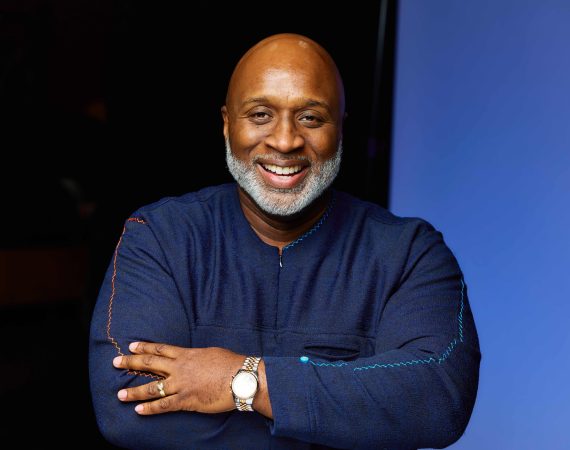
CHICAGO — In celebration of Black History Month, Trade Show Executive (TSE) is talking with influential Black professionals in events and hospitality to showcase their experiences, accomplishments and future-thinking plans for the industry. This week TSE is highlighting Jason Dunn, Sr., the CEO of the National Coalition of Black Meeting Professionals (NCBMP), an organization focused on providing education, professional development and leadership training, developing a network for its membership, attracting young talent to the industry and helping stimulate managerial opportunities for members.
Before joining the NCBMP, Dunn served as the Vice President at Visit Cincy, marking the first Black professional to hold the role at the organization.
TSE caught up with Jason Dunn, Sr., to discuss his career in events, objectives for the coalition and the organization’s upcoming Founder’s Day.
MADDY: Can you tell us a bit about your career journey? How did you get into the industry and ultimately to your current role as CEO of the NCBMP?
JASON: Ironically, I kind of stumbled into the industry. As a student at the University of Cincinnati, I was introduced to the power of tourism by encouraging people to boycott Cincinnati after the murder of Timothy Thomas in 2001. This was a pivotal experience in my journey that frankly shaped my passion for industry and anchors my perspective. Causing change by understanding community tensions and aiming to address deeper social and historical issues through tourism and public engagement are the fundamental tenants of my foundation.
While at Visit Cincy, I became the CVB’s first Black Vice President in its 79-year history and played a pivotal role in bringing diverse conventions to the destination. During my tenure, the number of multicultural/diverse meetings in Cincinnati represented more than 25% of all CVB new business from 2008-2018.
Most of the conferences came from NCBMP. My 18-year career there included the development of the Dan Lincoln Institute for Hospitality Leadership, which works with Cincinnati public schools, colleges and local hospitality businesses to build a pipeline of diverse talent within the industry and led the groundbreaking 2018 report of the Cincinnati Music Festival’s $107 million economic impact to the region’s economy. In reflection, we were directly involved in making the City of Cincinnati more inclusive and welcoming, not only to those coming in from outside but also to the local communities who felt marginalized or excluded.
Interestingly enough, working with the city officials like Commissioner Alicia Reece and others, NCBMP was a main platform where a lot of diplomacy and careful thought, especially given the political unrest and skepticism around tourism at that time, brought people together.
NCBMP members, NAACP, NOBLE® [National Organization of Black Law Enforcement Executives™] and NBCUSA [National Baptist Convention U.S.A.] were the impetus of reviving Cincinnati’s convention business. It is truly a full-circle moment.
MADDY: In your role, what are your major priorities and goals for the organization?
JASON: Our organization is focused on both internal growth and external impact, with a strong emphasis on support, development, and influence. My Board has been direct in their expectations and the teams’ priorities are laser-focused on creating lasting value for both our members and the broader event industry. Here’s a breakdown of how each priority supports this:
1. Strengthen operational infrastructure: Ensuring internal systems and processes are solid will provide better support for our members, helping them succeed and making NCBMP more resilient in the long term.
2. Expand global footprint & industry influence: This will empower NCBMP to reach more people, drive innovation and create stronger partnerships that elevate our industry leadership.
3. Prepare members to compete: By offering education and resources, we will empower our members to stay competitive, which in turn increases our organization’s overall reputation and value proposition.
4. Cement workforce pipeline for students: Building pathways for high school and college students into the industry creates long-term sustainability and helps nurture future talent.
5. Continuing to be conscious of the industry: Leading with integrity and a strong ethical stance helps define NCBMP’s role as a trusted voice and a change agent.
MADDY: The NCBMP has some goals this year of finding partnerships to support entrepreneurial development. Will you tell us a bit more about what you’re looking for and how that supports NCMBP’s overall mission?
JASON: NCBMP’s membership consists of not only traditional organizational planners and suppliers, but also many entrepreneurs. We recognize that our growing entrepreneurial membership base helps drive innovation, provides unique goods and services, and widens the profile of event professionals. This audience is a key component that will support our growth strategy as mentioned below:
1. Establishing Key Partnerships: Collaborate with organizations that offer resources, expertise or funding that aligns with the goals of supporting entrepreneurs.
2. Resources & Training: Partnerships that provide access to mentorship, technical assistance and business training programs can directly support emerging entrepreneurs.
3. Networking & Visibility: A strong network of partners allows for more visibility, connections and collaborations. These connections will help emerging entrepreneurs scale their businesses and gain access to markets or resources they might not have had otherwise.
4. Workforce Development & Job Creation: These partnerships can also help align our efforts to create job opportunities and expand the professional pipeline in the communities we are focused on, making the entrepreneurial ecosystem sustainable in the long term.
MADDY: On Feb. 23, 1983, the NCBMP was founded. How has the organization changed since its founding and what has stayed the same over the last 42 years?
JASON: Over the past 42 years, NCBMP has evolved to meet the changing needs of our members, expanding the focus to encompass new markets, trends and partnership opportunities. However, our core values have not changed. In fact, they have arguably become stronger.
1. Commitment to Empowerment: From its inception, NCBMP has been focused on empowering our members. This commitment has remained constant over the years. Whether through leadership programs, conferences or targeted activations, the organization has always aimed to ensure that our members are represented, supported, and prepared to succeed.
2. Fostering Networking and Community: The organization continues to be a platform for members to connect with other influential leaders, both within and outside the organization. Building strong, supportive communities has been essential in helping members achieve success in their careers and businesses.
3. Expansion of Membership and Reach: Over time, NCBMP’s membership has grown in both size and diversity, extending beyond traditional event planners/ suppliers to include a diversity of hospitality professionals and entrepreneurs from a range of sectors.
4. Evolving Partnerships and Empowerment: NCBMP’s network of partnerships has grown and diversified, spanning across public and private sectors, academia, non-profits and global organizations.
5. Advancements in Education and Professional Development: We have doubled down on preparing our members to compete by enhancing our educational programming, mentorship and training.
MADDY: You were recently elected Treasurer of the Events Industry Council, setting you up to serve as Chair in 2027. Over the course of your career, what kinds of benefits do you feel you’ve gotten from being involved in industry organizations like the EIC?
JASON: EIC is a global organization that really leans in on elevating the brilliance of our industry. The global perspective has afforded me opportunities to understand the reach and economic influence of our members. Being a leader within EIC opens doors to connect with a wide range of professionals across the events industry. These relationships can lead to collaborative partnerships, mentorship opportunities and insight into emerging trends that are shaping the future of the industry.
Additionally, organizations like EIC provide access to valuable industry research and data, which are essential for staying ahead of the curve. Lastly, being involved in these types of organizations often gives me the chance to contribute to the greater good of our ecosystem. Whether through mentorship, developing resources or advocating for change, I get to help shape a better future for the events industry, something that is deeply rewarding.
Related. NCBMP Webinar Breaks Down Executive Order Impacts on Events
MADDY: While doing some background for this piece, I found your work with Cincinnati’s public transportation system impressive — and demonstrably impactful. For those who may not know what I’m talking about, would you tell us a bit about how your work with the Southwest Ohio Regional Transit Authority tied into your work at the Cincinnati CVB?
JASON: Serving as the Chair of the Southwest Ohio Regional Transit Authority for six years was probably the most consequential act of my professional career. I was appointed by two different mayors and led a passionate board of individuals who represented county governments that spanned over four counties, the City of Cincinnati and political parties. Arguably, this is where I learned the wholistic power of tourism. The NAACP, World Choir Games and MLB All Star Game were proof points that by partnering with our event community, we can elevate the visitor experience. However, the act of change that really centered our industry’s impact was expanding our transit system via a ballot initiative.
For context, a ballot initiative that had been denied by the region multiple times dating back to the early 70’s passed in 2020 by 980 votes (67,698 vs 66,718). The success of the ballot made it easier for tourists to navigate the city, making the attractions more accessible, which in turn improved tourism numbers. Per the support of Dan Lincoln (the late CEO of Visit Cincy), I was empowered to serve on the board. We knew that our events community had difficulty getting employees to work.
The transit system was ineffective with the changing geography of the region and the events industry struggled to sustain a consistent mode of getting people to work in a timely manner. In my mind, there is no question that public transportation and tourism intersect in cities, especially in places like Cincinnati, where improving access to transit can have a huge impact on local tourism, job creation and the visitor experience. Strengthening the transit system was a key component to making Cincinnati competitive. It will always be a proud moment.
MADDY: Reflecting on the last year, what have been one or two big highlights for you and the NCBMP?
JASON: There are several that come to mind. Through my lenses, the importance of creating a sense of community while balancing the business of the organization was on full display in 2024. We do business with our friends and that motto has come true.
MADDY: What are you most looking forward to in 2025?
JASON: Growing our influence while expanding our membership base, strengthening our student education program and elevating our education leading up to the conference in Portland.
Want more content like this? Subscribe to Trade Show Executive’s weekly newsletter for the hottest news, case studies and thought leadership in the industry.